
Local SEO Strategies: How Small Businesses Can Outrank Competitors in Google Search
January 16, 2026 |
For small businesses, competing with national brands or larger local chains on Google can feel like an uphill battle. But here’s a secret: you don’t always have to. With effective Local SEO strategies, small businesses can carve out their niche, dominate local search results, and attract customers right to their doorstep.
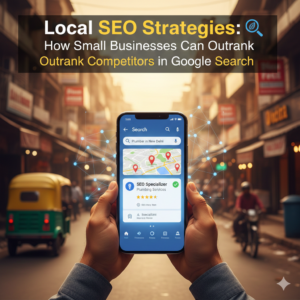
Local SEO is all about optimizing your online presence to rank higher in search results for customers in your immediate area. Think “pizza near me” or “plumber in [your city].” Here’s how you can start outranking your local competitors:
- Optimize Your Google Business Profile (GBP): This is the cornerstone of Local SEO. Your GBP is your free business listing on Google, appearing in Google Maps and the local pack of search results.
- Complete Everything: Fill out every section: business name, address, phone number, website, hours, categories, and services.
- Engage with Reviews: Respond to every review, positive or negative. It shows you value customer feedback.
- Upload Photos: High-quality images of your storefront, products, and team make your profile more appealing.
- Post Regularly: Use the “Posts” feature to share updates, offers, or events.
- Build Local Citations: A citation is any online mention of your business’s Name, Address, and Phone number (NAP). Consistency is key here. Ensure your NAP is identical across all platforms.
- Key Directories: List your business on prominent local directories like Yelp, Yellow Pages, TripAdvisor (if relevant), and industry-specific sites.
- Consistency: Inconsistent NAP information confuses search engines and can hurt your rankings. Double-check everything!
- Geo-Targeted Website Content: Incorporate location-specific keywords naturally into your website content.
- City & Neighborhood Pages: If you serve multiple areas, create dedicated service pages for each location (e.g., “Plumbing Services in [City A],” “Emergency Repairs in [Neighborhood B]”).
- Local Landmarks: Mention local landmarks or community events in your blog posts to reinforce your local relevance.
- Generate Local Reviews: Positive reviews are a powerful trust signal for both potential customers and Google.
- Ask for Reviews: Don’t be shy! Encourage satisfied customers to leave reviews on your GBP, Yelp, or Facebook.
- Simplify the Process: Provide direct links or QR codes that take customers straight to your review page.
- Mobile-Friendly Website: Most local searches happen on mobile devices. Ensure your website is responsive, fast-loading, and easy to navigate on smartphones.
By focusing on these strategies, small businesses can significantly improve their visibility in local search, drawing in more nearby customers and truly outranking the competition where it matters most: in their own backyard.